
Features
Built for communication that has to hold up.
Modus is for parents who need messaging kept contained, clearly recorded, and ready to review. Not a family organiser. A record.


✓ Australian-built · Permanent record · No editing · No deletion
The shape
Two adults. One private record.
One space, two people, nothing else. No group chat, no feeds, no children's accounts.
- Two adult users only
- Expiring, single-use invite for the second party
- No public threads
- No group chat
- No child accounts
Records
Messages stay as they were sent.
Once a message is sent, neither party can edit or delete it. That's the core of the whole product.
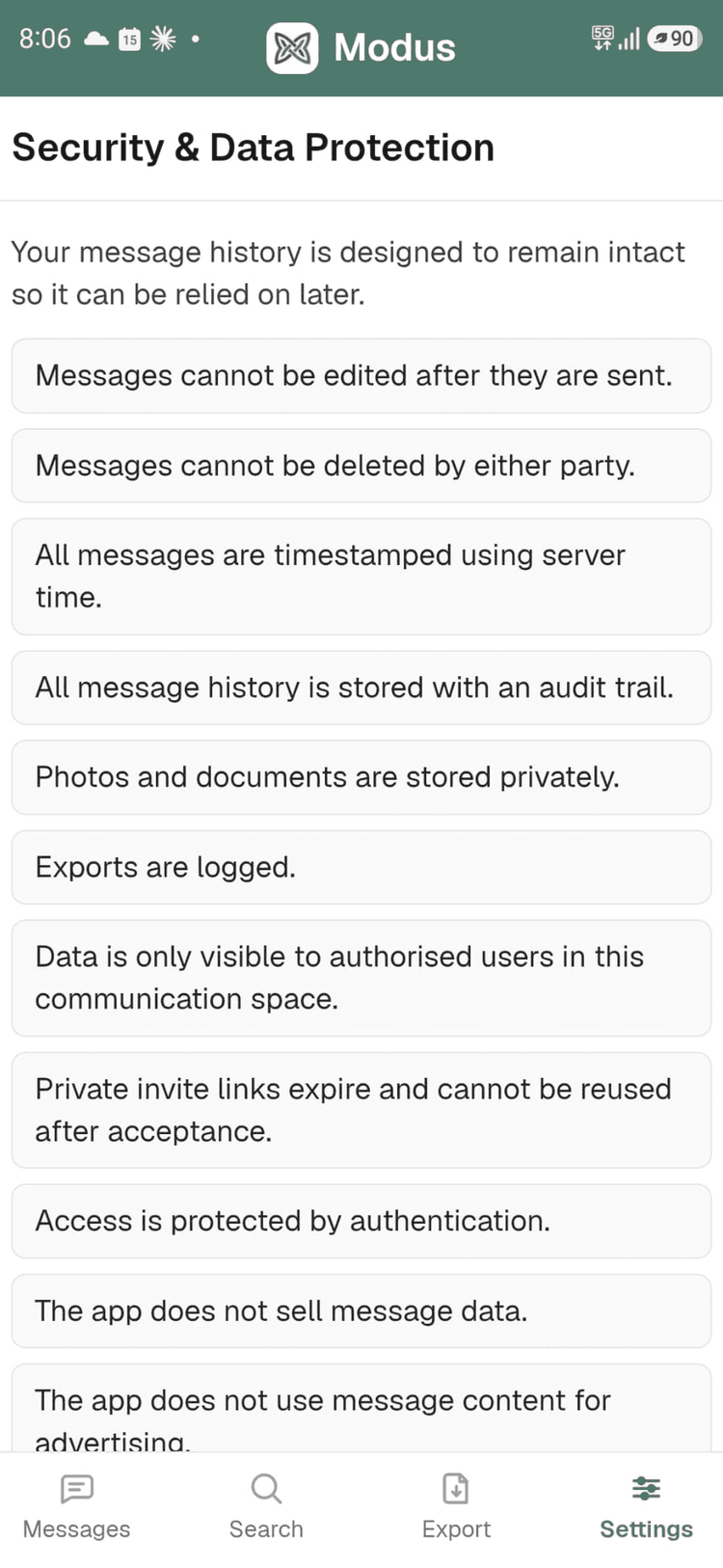
- No editing after send
- No deletion by either party
- Server-side timestamps
- SHA-256 message hash
- Audit event on every send
- Searchable long-term history
In high-conflict communication, the record is what matters. Editing and deletion create confusion, disputes, and missing context. Modus keeps the history whole.
Rules
A pause before it becomes part of the record.
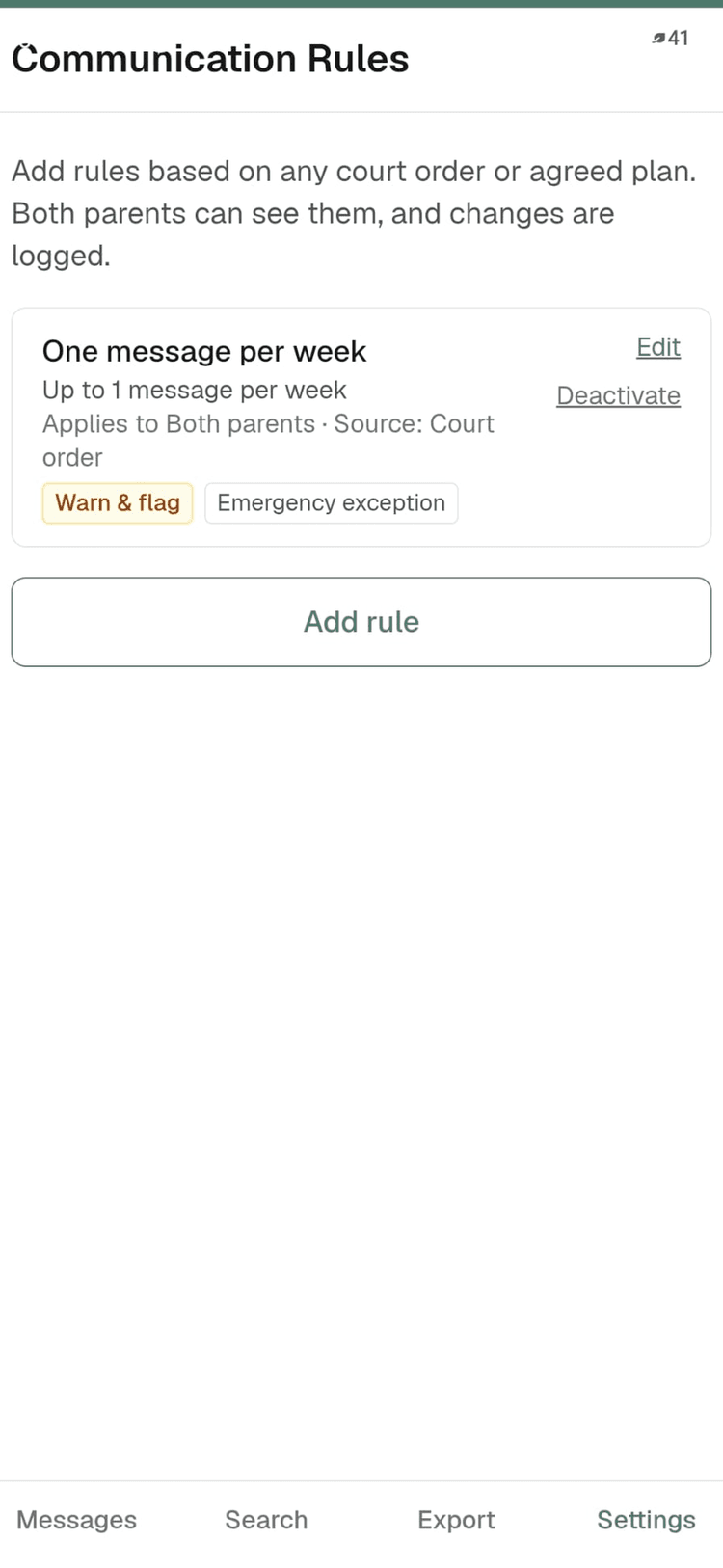
Modus can warn before a message goes: heavy caps, aggressive tone, threat-like phrasing, or a message that falls outside your rules. You still decide whether to send.
Rules you configure
- Frequency (e.g. one non-urgent message per week)
- Time windows (only between set hours)
- Topic limits (only school, medical, changeover)
- Warn and flag, or hard-block where you set it
- Emergency override per rule
A flag is a record label, not a verdict. Modus writes “possible breach” or “likely breach based on configured rule,” never “breach proven.” You enter the rules from your own orders or advice. Modus doesn’t interpret orders or give legal advice.
Search
Find one message without scrolling through years.
Search by keyword, date range, sender, topic, attachments, flagged, or possible breaches.
Export
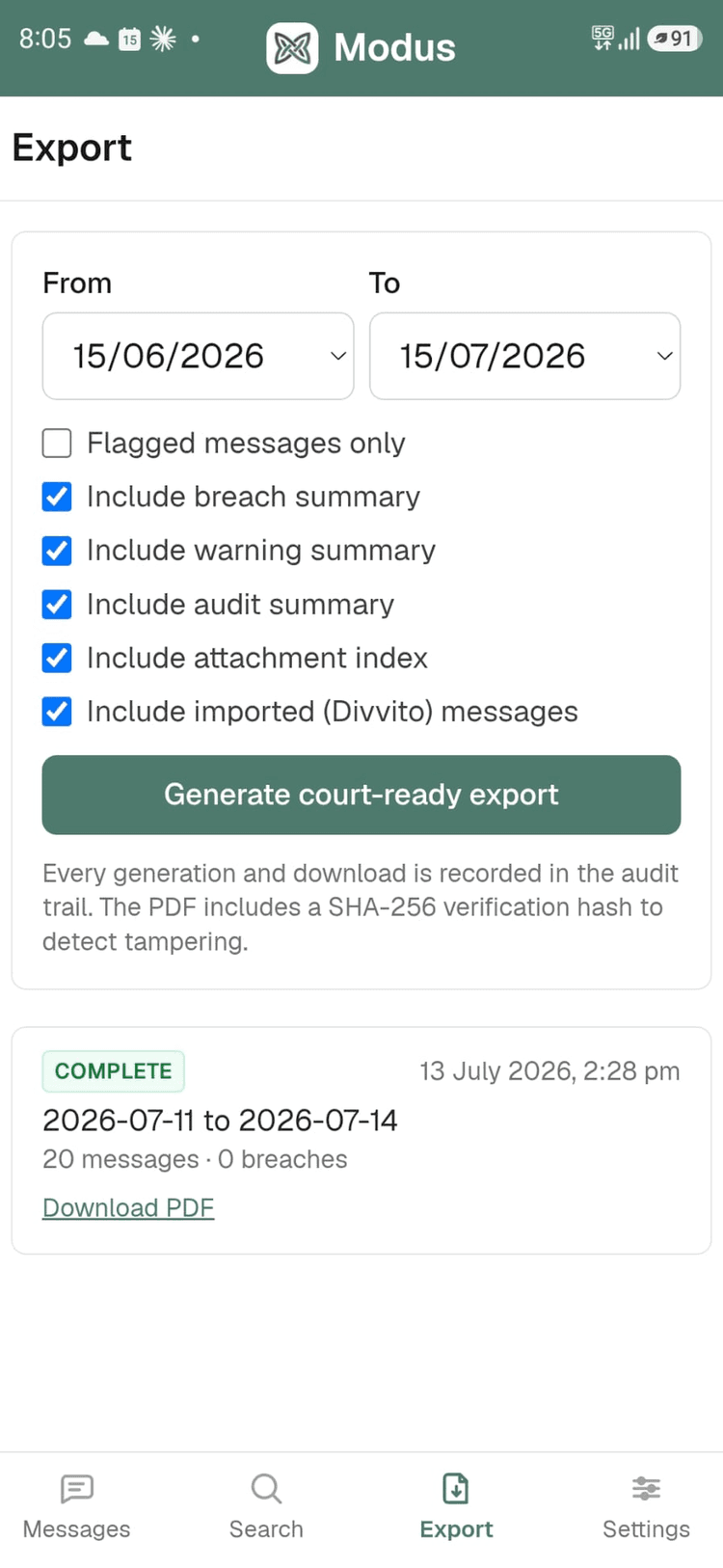
Export a clean record by date range.
A searchable PDF for court, a lawyer, a support service, or your own files. All messages or flagged only, with warning and breach summaries, an attachment index, and a SHA-256 verification hash to detect tampering.
Every export is logged. Modus doesn’t give legal advice or guarantee a court accepts any document.
Continuity
Coming from Divvito? Bring it with you.
Import your existing Divvito export. The original file is stored and hashed, and every imported message is clearly labelled.
See how →Security
Sensitive records need real controls.
- Authentication required
- Authorised users only
- Private attachment storage, no public links
- Expiring invite links
- Row-level database access controls
- Export and rule-change audit logs
- Clear account-deletion pathway
Download
Get Modus.
Modus is on the App Store and Google Play now, and works in your browser.